

A root canal is a routine procedure that removes infected pulp from inside a tooth, then cleans, fills, and seals the space, usually in one to two appointments under local anaesthetic. It relieves the toothache rather than causing pain, and it lets you keep your natural tooth.
“Root canal” might still be the most feared phrase in dentistry, but the reputation is decades out of date. Here is the part the jokes leave out: the pain people associate with root canals is the toothache that comes before the treatment. The root canal is what makes it stop.
What is a root canal and why would I need one?
A root canal treats the inside of the tooth: the dentist removes inflamed or infected pulp, the bundle of nerves and blood vessels at the tooth’s core, then cleans, shapes, fills, and seals the root canals. You need one when deep decay or a crack lets bacteria infect that pulp.
Because the pulp is sealed inside hard tooth, infection pressure has nowhere to go. That is the famous throbbing toothache that keeps people up at night. The American Association of Endodontists describes the treatment plainly: the infected pulp is removed, the canal is carefully cleaned and shaped, then filled and sealed so bacteria cannot get back in.
The tooth stays in your mouth and keeps working. A fully grown tooth does not need its pulp to function, it only needed it to develop.
Does a root canal hurt?
No, with modern local anaesthetic, a root canal should feel like a long filling: pressure and vibration, not pain. The pain people associate with root canals is the infected-tooth ache that comes before treatment; the procedure is what makes it stop. Mild sensitivity for a few days afterward is normal.
The dread is almost entirely secondhand, inherited from an era before modern anaesthetics and rotary instruments. Patients often describe the appointment as long and boring rather than painful, you are lying back with your mouth open while the dentist does careful, precise work. Afterward, the AAE notes the tooth may feel sensitive for the first few days, especially if there was pain or infection before the procedure.
If needles or dental settings themselves are the hard part for you, you have plenty of company, a national survey of Canadian adults found 9.8% somewhat afraid of dental treatment and a further 5.5% highly fearful. See our guide to easier visits with dental anxiety, everything there applies doubly here.
What happens during a root canal, step by step?
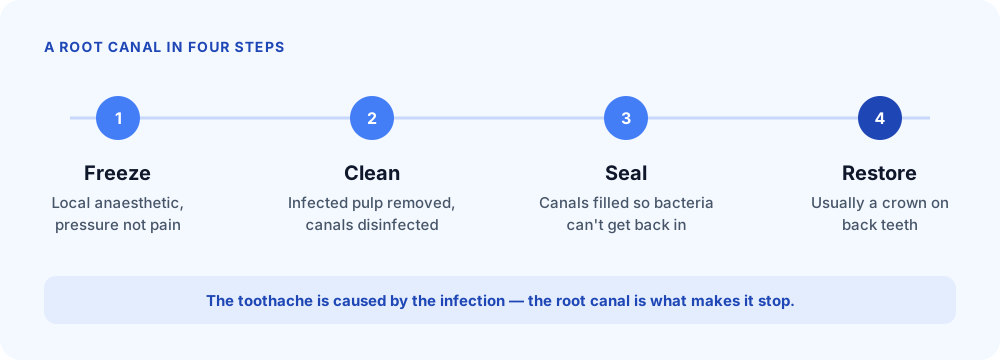
Expect four stages: freezing the area, cleaning out the infected pulp, filling and sealing the canals, and restoring the tooth, usually with a crown on molars. Appointments run longer than a filling, and the American Association of Endodontists notes most root canals are finished in one to two appointments.
- Freezing. The area is numbed thoroughly. You should feel pressure, not pain, and if you feel anything more, say so and more anaesthetic is added.
- Cleaning. The dentist makes a small opening in the top of the tooth and removes the infected pulp with fine instruments, then disinfects the canals.
- Sealing. The cleaned canals are filled with a rubbery material called gutta-percha and the opening is closed.
- Restoring. Most back teeth then need a crown, because a tooth without pulp becomes more brittle over time. Front teeth can sometimes get by with a filling.
Simple cases finish in one visit; a molar with curved canals or a stubborn infection may take two.
How much does a root canal cost in Toronto?
Cost depends mostly on which tooth it is, molars have more canals and take more work than front teeth, plus whether you need a crown afterward. Ontario dentists set their own fees, using the Ontario Dental Association’s annual Suggested Fee Guide as a reference, so always ask for a full written quote first.
The ODA is explicit that dentists are not required to follow its fee guide, they set their own fees, which can sit above or below it. That is exactly why the smartest move is asking for the full quote up front, root canal and crown together. A surprise second bill for the crown is an easy trap, and it is completely avoidable.
On coverage: many private plans handle a root canal differently than the crown that follows it, so read your own plan before treatment rather than after. If you qualify for the Canadian Dental Care Plan, canada.ca lists root canals among covered services (re-treatments need preauthorization), our CDCP visit guide walks through using it at an Ontario clinic.
Is it better to get a root canal or pull the tooth?
Save the tooth when it can reasonably be saved. An extraction may look simpler on the day, but a missing tooth lets neighbours drift, changes your bite, and replacing it later with an implant or bridge is a bigger procedure with its own price tag, on top of losing the natural tooth.
Sometimes extraction is genuinely the right call, a tooth cracked below the gumline or too broken down to rebuild cannot be saved. But the working rule dentists apply to their own teeth is simple: keep the natural tooth whenever it can reasonably be saved, because nothing artificial works quite as well.
The durability backs that up. The American Association of Endodontists reports that most root-canal-treated teeth last as long as other natural teeth, the fact Orbit Dental points to whenever patients weigh a root canal against an extraction.
How do I know if I need a root canal?
Classic warning signs include a throbbing toothache that lingers or wakes you at night, pain that persists after hot or cold, a tooth that has darkened compared to its neighbours, a pimple-like bump on the gum, or deep pain when biting down. Only an exam and X-ray can confirm it.
One important catch: an infected tooth can also go quiet when the nerve dies. The pain stops, but the infection is still there and spreading. A toothache that “fixed itself” deserves an X-ray, not a celebration.
Pulp infections do not heal on their own. Caught early, a root canal is routine; left long enough, it can become an abscess, a dental emergency, or a tooth that truly cannot be saved. If you’re weighing where to go, our complete guide to finding a dentist in Toronto covers how to choose a clinic and what to ask before you book.
Don’t wait it out
A suspicious toothache should get looked at this week, not next year. Every clinic in the Orbit Dental network is verified, your cost is shown up front, and booking takes a couple of minutes. See how it works.
Frequently asked questions
How long does a root canal take?
Per the American Association of Endodontists, most root canals are completed in one to two appointments, molars with multiple curved canals sit at the longer end. A crown, if needed, is usually placed at a separate visit, so ask for the full timeline up front.
How long does a root canal last?
With a proper final restoration, a very long time, the American Association of Endodontists states that most endodontically treated teeth last as long as other natural teeth. Protecting a treated back tooth with a crown is what guards it against fracture over the years.
Why does my tooth still hurt a few days after a root canal?
Some sensitivity in the first few days is expected, especially if the tooth was painful or infected before treatment. It should steadily settle. If pain is severe, worsening, or accompanied by swelling, call your dentist, the tooth may need a follow-up check.
Does the CDCP cover root canals?
Yes, endodontic services, including root canals, are on the Canadian Dental Care Plan's covered-services list, though re-treatments require preauthorization. Participation is voluntary for providers, so confirm your clinic accepts CDCP patients and ask for an estimate to Sun Life before treatment starts.
Can a tooth infection go away on its own?
No. The pain can stop when the nerve dies, but the infection remains and can keep spreading toward an abscess. A toothache that disappeared on its own still needs an exam and X-ray to rule out a dying tooth.