

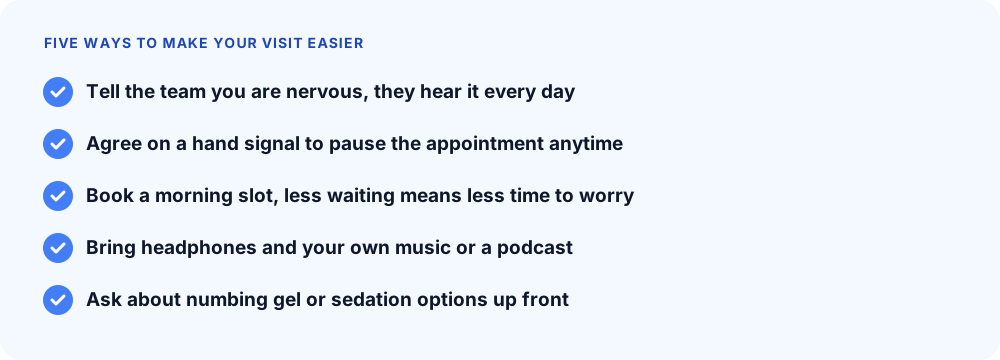
Dental anxiety is common, a national Canadian survey found about one in six adults fear dental treatment. The most effective fixes are simple: tell the team you’re nervous, agree on a stop signal, book a morning slot, bring headphones, and ask about comfort options before you sit down.
How common is dental anxiety?
Dental anxiety affects roughly one in six Canadian adults. A 2005 national survey published in Anesthesia Progress found 9.8% of Canadians were somewhat afraid of dental treatment and a further 5.5% reported a high level of fear. It is one of the most common reasons people delay or skip care entirely.
That one-in-six figure is why Orbit Dental screens its partner clinics on how they treat nervous patients, not just on credentials. If the dentist makes you anxious, you are the norm, not the exception, and a good clinic already knows how to work with you.
Should I tell the dentist I’m nervous?
Yes, telling the team you’re anxious is the single most effective thing you can do, and it feels awkward for about four seconds. Dental teams treat nervous patients every day; once they know, they slow down, explain more, check in often, and avoid surprises.
A clinic that brushes this off is the wrong clinic.
How can I feel more in control at the dentist?
Agree on a stop signal and ask the dentist to narrate each step before it happens. Most dental fear is about feeling trapped, and these two arrangements remove exactly that: you can pause the appointment anytime, and nothing that happens in the chair comes as a surprise.
- A hand signal. Agree on a raise-your-hand cue that means “pause,” and hold them to it. Knowing you can stop anytime lowers the panic more than almost anything else.
- Ask what comes next. “Can you tell me before you do each thing?” turns the unknown into a series of small, expected steps.
How should I prepare for a dental appointment if I’m anxious?
Book a morning slot so dread has less time to build, bring headphones with your own music or a podcast to mask the sounds, and skip caffeine beforehand, since it can amplify a racing heart. Small logistics, set up before you arrive, do most of the calming work.
- Book a morning slot. Less time sitting in the waiting room means less time for dread to build.
- Bring headphones. Your own music or a podcast is a genuinely powerful distraction from the sounds that bother people most.
- Skip the caffeine beforehand. It can amplify a racing heart and make you feel more on edge.
What comfort options can I ask for?
Ask up front about topical numbing gel before freezing, and whether sedation options are available for more involved work, you do not have to white-knuckle it. Knowing the tools exist is often enough to take the edge off, even if you never end up using them.
Does avoiding the dentist make anxiety worse?
Yes, avoidance is the one choice that reliably makes dental anxiety worse. Skipped visits let small, cheap problems grow into bigger, more involved ones, and bigger procedures feed the fear. Statistics Canada reports more than one-third of Canadians hadn’t seen a dental professional in the previous 12 months.
The stakes of waiting are real but fixable early: the Canadian Dental Association notes that early gum disease (gingivitis) can be reversed, while untreated disease breaks down the gum and bone that hold teeth in place. A calm, well-prepared visit is how the cycle breaks, and if it has been a long gap, our guide to going back to the dentist after years away covers exactly that situation, judgment-free.
How do I choose a dentist if I have dental anxiety?
Choose a clinic that treats gentleness as a feature: one that explains each step without pressure, welcomes questions, and takes a hand-raise seriously. Ask directly how they handle nervous patients when you book, a clinic that brushes off the question is the wrong clinic for you.
Gentleness is a real, askable quality. The traits to look for are the same ones in our guide to choosing a dentist in Toronto, and if you’re starting from zero (no dentist, not sure about costs or coverage) the complete guide to seeing a dentist in Toronto walks through the whole process.
Every clinic in the Orbit Dental network is verified, your cost is shown up front, and booking takes a couple of minutes, so the hardest part stays small. See how it works.
Frequently asked questions
Can I ask the dentist to stop during treatment?
Yes. Agree on a raise-your-hand signal before the appointment starts and hold the team to it. Any reasonable clinic will honour a pause cue immediately, knowing you can stop at any moment is one of the most reliable ways to lower panic in the chair.
Is sedation available for anxious patients?
Many clinics offer comfort options ranging from topical numbing gel to sedation for more involved procedures. Availability varies by clinic, so ask when you book. For most nervous patients, simply knowing the option exists, and that the team takes anxiety seriously, takes much of the edge off.
How often do I actually need a dental exam?
There's no universal rule. The Canadian Dental Association says exam frequency depends on your oral health needs, for many people that means an exam every six months, though your dentist may recommend more or less often. More in our guide to how often to see the dentist.
What should I expect at the first appointment back?
Mostly assessment, not procedures. Per the Canadian Dental Association, a dental exam includes a medical history, an inspection of your teeth and gums, a check of existing dental work, and x-rays if necessary. Our walkthrough of what happens at a dental checkup has the step-by-step.