

Teeth whitening in Toronto comes down to three legitimate options: in-office whitening supervised by a dentist, custom take-home trays with professional-grade gel, and over-the-counter strips. All three rely on peroxide, what changes is strength, speed, supervision, and price. A quick dental exam first confirms whitening will actually work on your teeth.
How does teeth whitening work?
Nearly all legitimate whitening uses peroxide, hydrogen or carbamide, that penetrates enamel and breaks down stain molecules inside the tooth. Stronger gel and longer contact time mean faster, deeper results. Whitening toothpastes mostly scrub surface stains with mild abrasives, so they brighten a little but don’t change your underlying tooth shade.
Charcoal powders, oil pulling, and most viral “hacks” do nothing useful for tooth shade, and some are abrasive enough to wear enamel. If a product doesn’t put peroxide against your teeth for a meaningful amount of time, it isn’t whitening in any clinical sense.
What are the 3 real teeth whitening options?
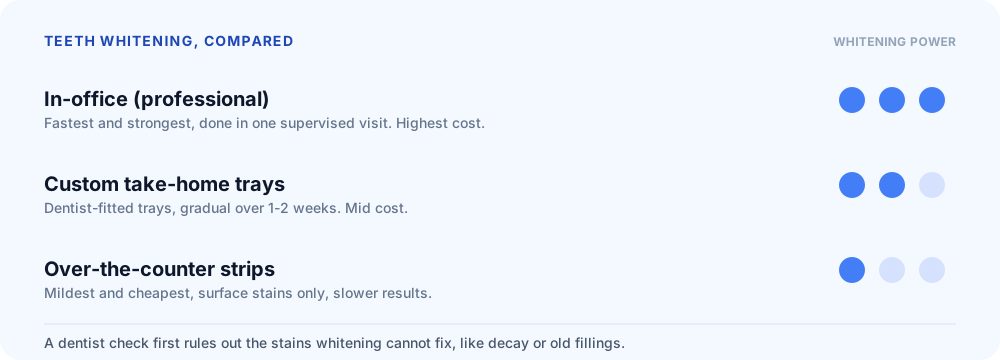
There are three real options: professional in-office whitening (strongest gel, gums protected, usually one visit), custom take-home trays from your dentist (professional gel worn over one to two weeks), and over-the-counter strips (weakest, slowest, cheapest). Custom trays are the value sweet spot for most people.
| Option | Cost band | Duration | Supervision |
|---|---|---|---|
| 1. In-office (professional) | Highest | Usually one visit | Dentist applies the gel with your gums protected |
| 2. Custom take-home trays | Mid | 1–2 weeks of daily wear | Dentist-made trays and professional gel, used at home with instructions |
| 3. Over-the-counter strips and gels | Lowest | 2–4 weeks, slowest results | None, package directions only |
Strips are fine for a small touch-up on surface stains. For deeper or long-standing staining, they tend to underwhelm, and the money is usually better put toward trays.
How much does teeth whitening cost in Toronto?
There is no fixed price. As the Ontario Dental Association explains, dentists set their own fees, which can sit above or below its annual Suggested Fee Guide, so whitening costs vary from office to office. In-office treatment costs the most, custom trays sit mid-range, and drugstore strips cost the least.
The practical move is to get a written quote before committing, and to compare it against what trays would cost at the same office. Cost surprises are avoidable: Orbit Dental shows you an estimated cost up front before you book, so you can weigh in-office against take-home trays with real numbers instead of ad copy. For the bigger picture on what dental work costs and who pays, see our guide to dental costs, insurance, and the CDCP in Canada.
What can teeth whitening not fix?
Whitening only lightens natural tooth enamel. The Canadian Dental Association’s position on tooth bleaching notes that bleaching does not whiten dental work, crowns, fillings, and dentures keep their original shade. Internal grey or banded discolouration also responds poorly, which is why an assessment comes before the gel.
This is the part the ads skip. If you whiten the natural teeth around an old filling or crown, the dental work stays its original colour, and you can end up with a visible mismatch you then have to pay to fix. A dentist can spot that risk in minutes.
Is teeth whitening safe?
Used as directed, yes for most people, the Canadian Dental Association says the most common short-term effects are tooth sensitivity and soft-tissue irritation, which should settle. The CDA does not recommend repeated bleaching beyond the initial treatment, since long-term effects aren’t fully understood, and advises deferring whitening during pregnancy.
The CDA’s consumer guidance adds that long-term use of whitening products may cause tooth sensitivity or abrasion. The sensible rule: whiten once, properly, then maintain the result, don’t keep re-bleaching. If sensitivity or gum irritation persists or gets worse, stop and see your dentist.
Does insurance or the CDCP cover teeth whitening?
Generally, no. Whitening is a cosmetic treatment, and cosmetic whitening does not appear among the services listed on the Government of Canada’s CDCP coverage page, which covers exams, x-rays, cleanings, fillings, and other clinically necessary care. Dental exams, however, are among the CDCP’s covered diagnostic services.
That distinction matters: the whitening itself comes out of your pocket, but the check-up that confirms you’re a good candidate is exactly the kind of exam most private plans and the CDCP do help pay for (subject to each plan’s rules and frequency limits). If you don’t currently have coverage, our guide to seeing a dentist in Toronto without insurance walks through your options.
Should I see a dentist before whitening my teeth?
Yes. The Canadian Dental Association’s position is that bleaching products should only be considered after careful discussion with a dentist, who can assess what’s causing the discolouration and whether bleaching will get the result you want, especially if you have fillings, root canal treatments, crowns, or very dark stains.
Orbit Dental’s partner clinics start every whitening conversation with that exam, for exactly the reasons the CDA gives. The sensible order:
- Book a check-up so nothing underneath is missed, here’s what a dental check-up actually involves, and confirm whitening will work on your teeth.
- Ask about custom take-home trays first; they’re the value sweet spot for most people.
- Choose in-office whitening if you want the maximum result fast and the budget fits.
Still looking for the right office to do it? Our complete guide to finding and seeing a dentist in Toronto covers how to choose a clinic, what visits cost, and how coverage works.
Book your check-up through Orbit, see your estimated cost up front, and earn a reward for completing it, then whiten from a clean, healthy starting point.
Frequently asked questions
Does whitening toothpaste actually whiten teeth?
Only slightly. Whitening toothpastes rely on mild abrasives that polish away surface stains; they don't hold peroxide against the tooth long enough to change the shade inside it. They're reasonable for maintaining a result after whitening, but they won't deliver what in-office treatment or custom trays can.
Does teeth whitening damage enamel?
Used as directed, the most common effects are temporary sensitivity and gum irritation, per the CDA. The bigger risk is overuse: the CDA does not recommend repeated bleaching beyond the initial treatment because it may lead to tooth pitting and pulp ("nerve") damage. If sensitivity persists, stop and see your dentist.
Can I whiten my teeth while pregnant?
No, the Canadian Dental Association advises deferring tooth bleaching during pregnancy. Whitening is elective and cosmetic, so there's no urgency that justifies the unknowns. Wait until after pregnancy, then start with a dental exam as you would at any other time.
How long does teeth whitening last?
It depends on your habits, coffee, tea, red wine, and smoking re-stain teeth faster. Rather than re-bleaching on a schedule, which the CDA advises against, protect the result with good brushing, regular professional cleanings, and dentist-guided touch-ups only when genuinely needed.