

Bleeding gums are not normal. Healthy gums don’t bleed from a soft toothbrush or a strand of floss, bleeding is a warning sign of gingivitis, gum inflammation the Canadian Dental Association says can be prevented and reversed. Caught early, the fix is usually two weeks of thorough, gentle cleaning at home.
That makes it one of the few dental problems you can genuinely fix for free, but only while it’s still early. Here’s how to tell where you are on that line.
Why do my gums bleed when I brush or floss?
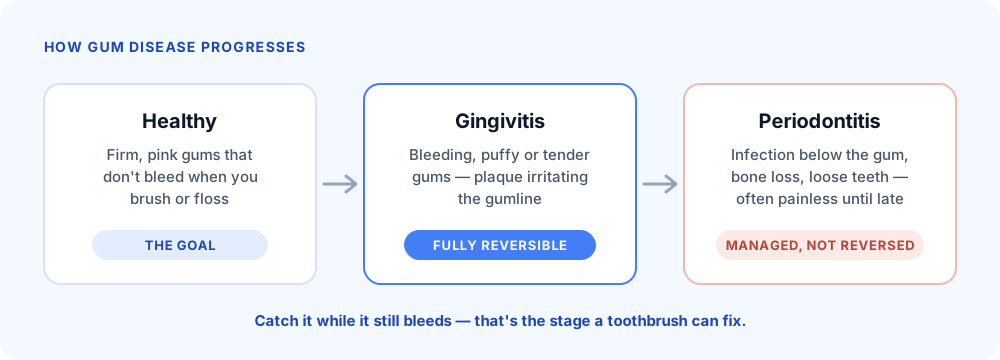
Gums bleed because they’re inflamed, not because you brushed too hard. Plaque, the soft bacterial film that forms on teeth every day, builds along the gumline, and your immune system responds with swelling and extra blood flow. The Canadian Dental Association lists traces of blood on your toothbrush among the classic warning signs of gingivitis.
Inflamed tissue is fragile tissue, so ordinary brushing makes it bleed. The important part: at this stage, no permanent damage has been done. The CDA’s guidance is direct, gingivitis can be prevented, and once started, it can be reversed.
Should I stop brushing or flossing where my gums bleed?
No, clean the bleeding area more thoroughly, not less. The bleeding is caused by the plaque, so avoiding the spot gives it more time and makes things worse. Use a soft brush twice a day and floss daily, right at the gumline; early bleeding is the inflammation settling, not the brushing doing harm.
This is the mistake almost everyone makes. When a spot bleeds, the instinct is to brush it gently or skip flossing there “until it heals.” That’s exactly backwards, the plaque driving the inflammation is still sitting there, undisturbed.
How do I know if it’s gingivitis or something more serious?
Try the two-week test: brush thoroughly twice a day with a soft brush angled into the gumline, and floss once daily, skipping nothing, for two weeks. If the bleeding stops, it was gingivitis and you’ve already fixed it. If it persists despite genuinely good cleaning, book a dental check-up.
- Bleeding stopped? Keep the routine and it stays fixed.
- Still bleeding after two weeks? Either there’s hardened tartar that only a professional cleaning can remove, or something more is going on. Measuring gum pockets is a standard part of what happens at a dental check-up, so the answer comes quickly.
When should I see a dentist about bleeding gums?
See a dentist promptly if your gums bleed on their own, pull away from your teeth, or keep bleeding after two weeks of proper cleaning. Untreated gingivitis can advance to periodontitis, where, as the Canadian Dental Association explains, the gum and bone holding teeth in place break down and teeth can loosen.
Book promptly (not at your next routine visit) if you notice any of these:
- Gums that bleed on their own, without brushing
- Gums pulling away from teeth, or teeth looking longer than they used to
- Persistent bad breath or a bad taste that brushing doesn’t fix
- A tooth that feels slightly loose or has shifted
- Pus or tenderness along the gumline
Gum disease is more common than most people assume: Health Canada’s Canadian Health Measures Survey found that 21% of Canadian adults with natural teeth have had a moderate or severe gum problem. It’s a big part of why the clinics in Orbit Dental’s network treat gum checks as core to every exam, and why visit frequency matters even when nothing hurts. If you’re weighing where to go, our complete guide to finding a dentist in Toronto walks through the whole decision.
What makes bleeding gums more likely?
Some situations call for a professional opinion rather than the two-week test alone. If you’re pregnant, managing diabetes, taking regular medications, or you smoke, mention the bleeding at a check-up instead of self-diagnosing. Bleeding isn’t the only warning sign either, the CDA also lists puffy gums and a change in gum colour.
The bottom line
Bleeding gums are your earliest, cheapest warning, the stage where the fix is a toothbrush, not a treatment plan. Take the two-week test seriously, and if the bleeding outlasts it, get it looked at.
Every clinic in the Orbit Dental network is verified, your cost is shown up front, and booking takes a couple of minutes. See how it works.
Frequently asked questions
Can bleeding gums heal on their own?
Yes, at the gingivitis stage. The Canadian Dental Association confirms gingivitis can be prevented and, once started, reversed; good brushing and daily flossing remove the plaque driving the inflammation. Once disease advances below the gumline, professional treatment is needed to stop further damage.
How long should it take for bleeding gums to stop?
Give it two weeks of consistent, thorough cleaning, soft brush twice daily, floss once daily, no skipped spots. Bleeding that improves and stops within that window was almost certainly gingivitis. Bleeding that outlasts it usually means hardened tartar that only a professional cleaning can remove, so book a check-up.
Will my dentist check for gum disease at a regular check-up?
Yes. The Canadian Dental Association's exam overview lists assessing gum condition, including periodontal pockets and inflammation, as a standard part of every dental exam, alongside checking teeth, existing dental work, and screening for early signs of mouth or throat cancer.
What if cost is what's keeping me from getting checked?
You're not alone, Statistics Canada found nearly one in four Canadians (24%) have avoided dental care because of cost. The Canadian Dental Care Plan is open to Canadians without private insurance whose family income is under $90,000, and there are practical options if you're seeing a dentist without insurance in Toronto.
Is it too late if I haven't seen a dentist in years?
No. Gum measurements at a check-up show exactly where you stand, and there are treatment options at every stage. If it's been a long gap, here's what to expect when you go back to the dentist after years away, clinics see it constantly.